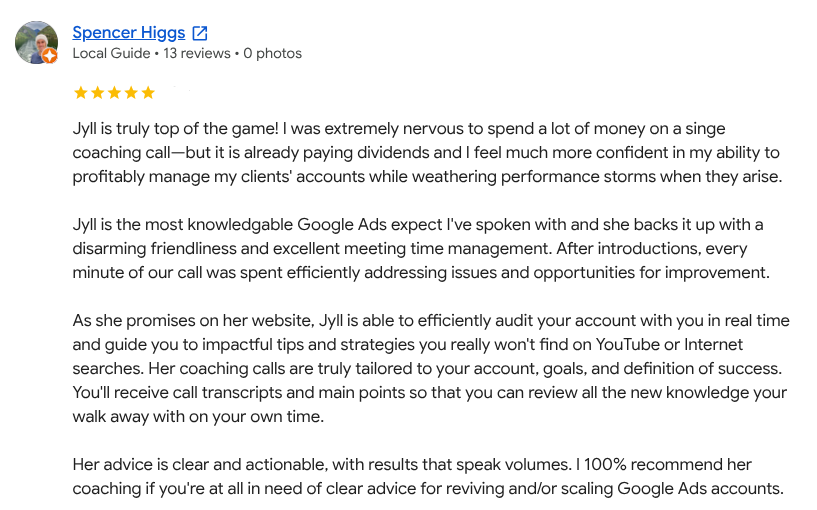
Have you ever handed the keys of your business over to an "expert," only to realize they completely trashed the place? That's exactly how my Google Ads coaching client, Stephanie, felt when we looked at her Responsive Search Ads.
But let's back up a step. Stephanie is a marketing manager for an enterprise B2B platform, and she inherited an "old Google Ads account." Her CEO told her to "boost performance." We've all been there, right?
With minimal training or guidance, she turned to Google's automated features and let AI take the wheel.
The promise? Google’s AI would dynamically generate ad copy, optimize variations, and scale leads seamlessly.
The reality? It was an absolute mess, which is why she booked a call with me...
This issue of The Insider is sponsored by Optmyzr
Optmyzr's latest feature release is built for the AI era; AI Campaign Creation spins up complete Search, PMax, and Shopping campaigns from a URL, while new Intent Similarity rules and Sidekick's on-demand search term analysis flag off-target queries automatically.
When I showed Stephanie the asset performance report for her Responsive Search Ads, we found that the AI had rewritten her copy into pure garbage.
It automatically scraped her website and generated uncapitalized text, alongside completely vague headlines like "Clarity and consistency." Huh?!
It stripped away the human empathy and raw pain points that Stephanie had carefully crafted, and replaced them with diluted, generic phrases that meant absolutely nothing to her target audience.
Worse yet, the AI bloated the ad with 20+ headline variations. When you give Google that many combinations on a modest B2B budget, it never learns what works well and what doesn't because it has to test every single permutation. No wonder Stephanie's CTR was sitting at a dismal 2.3%.
I've said it a hundred times, and I'll say it again: AI isn't inherently bad, but it is an average maker. And average isn't good enough for your Google Ads performance, especially in competitive enterprise B2B niches.
Stephanie knew in her gut that letting AI write her ads was backfiring, but before our call, she didn't know why. She left the call with a clear framework for how to re-write her Responsive Search Ads so that they'll actually resonate with her audience, and perhaps even attract some qualified leads.
If your ad quality is dropping, here's exactly what you need to do to fix it, like Stephanie:
- Reclaim Control: Turn off text customization and/or automated asset creation for your reset. Only turn it on again when your campaigns are already performing well, and you're open to new ideas that can boost existing performance
- Trim the Bloat: Drop your RSA down to just 7 or 8 headlines and 2 or 3 descriptions. Less variety (to start!) allows Google to gather definitive data and optimize your ads faster.
- Leverage Dynamic Keyword Insertion: Use the {} brackets to dynamically insert the exact keyword that matches to the users search directly into your headline. As long as your using exact match keywords, this will cover your ad relevance in one headline slot - so you can use the rest for...
- Focus on the "Why": Write headlines and descriptions that speak directly to the emotions your ideal client is experiencing. Replace dry text with punchy headlines that agitate the problem, showcase your human expertise, demonstrate social proof, and call them to action
Unsure whether Google's AI is supporting or sabotaging your campaigns? Book a call with me and we'll figure it out together.